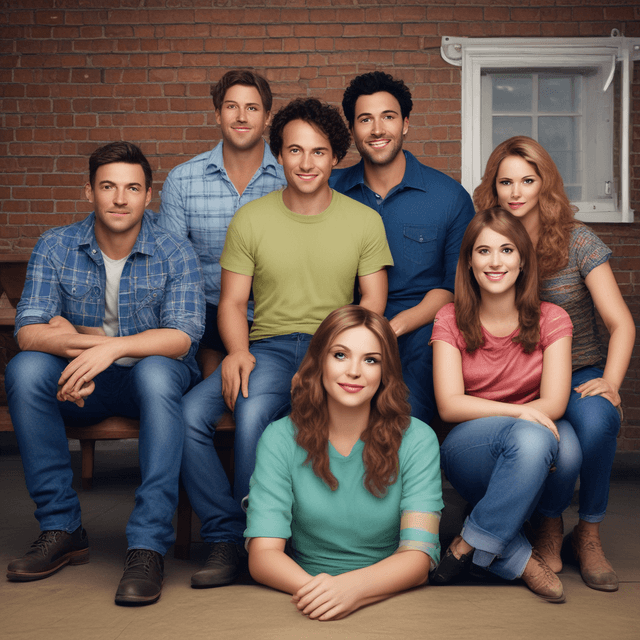
| Genre | Sitcom |
| Title | Originally Burly |
| Legacy | Developed a devoted cult following, groundbreaking depiction of the American working class on television |
| Themes | Working-class life • Economic anxieties • Hardships |
| Setting | Declining Rust Belt steel town |
| Starring | Unnamed actors |
| Created by | Unnamed writer(s) |
| Original run | 1986 - 1992 |
| No. of seasons | |
| No. of episodes | Unknown |
| Country of origin | United States |
| Original language | English |
"Originally Burly" was an American television sitcom that aired on CBS for six seasons from 1986 to 1992. Created by writer-producer Garth Ancier, the show centered on the life of Burly Jones, a working-class factory worker navigating the economic and social challenges of life in the declining industrial heartland of the United States.
The series followed Burly Jones (played by character actor James McDaniel), a steelworker in his 40s living in the fictional Rust Belt town of Millstead, Ohio. Burly was the patriarch of a multigenerational household that included his wife Sheila, his elderly father Vinny, and his adult son Frankie, who had returned home after failing to make it as a musician in Chicago.
Struggling to make ends meet on his factory job wages, Burly contended with the steady decline of Millstead's once-booming steel industry, the loss of union jobs, and the strain it put on his family. The show balanced humor derived from Burly's sarcasm and the family's quirks with more serious storylines about plant closures, healthcare costs, job insecurity, and the social unrest rippling through the Rust Belt.
"Originally Burly" was set in the fictional town of Millstead, based on real-life Rust Belt communities like Youngstown, Ohio and Gary, Indiana. The show's gritty, blue-collar aesthetic was heavily inspired by the work of documentary photographers like Danny Lyon and Sebastião Salgado, who captured the struggles of deindustrialization in the American Midwest.
Filmed on location in and around Pittsburgh, Pennsylvania, the series aimed for a naturalistic visual style that contrasted with the glamorized, laugh-tracked sets of most sitcoms of the era. The production team also consulted with labor organizers, former steelworkers, and local community leaders to ensure an authentic portrayal of working-class life.
"Originally Burly" never achieved the blockbuster ratings of fellow 1980s sitcoms like "The Cosby Show" or "Cheers." However, it developed a passionate cult following among critics and viewers who appreciated its unflinching depiction of economic hardship and its empathetic portrayal of the working poor.
The show was praised for its nuanced, non-judgmental approach to complex social issues like deindustrialization, substance abuse, and racial tensions in Rust Belt communities. Its bittersweet tone and lack of a tidy, feel-good resolution also set it apart from the era's more escapist, upbeat sitcoms.
While "Originally Burly" was canceled in 1992 due to declining ratings, it is now regarded as a landmark in the evolution of the working-class sitcom. Its influence can be seen in later shows like "Roseanne," "The Middle," and "Superstore" that similarly explore the economic anxieties of ordinary Americans. The series' gritty realism and empathetic approach to blue-collar struggles have also made it a touchstone for filmmakers and television producers seeking to authentically depict the working class experience.
